

Asbestos in NZ homes: what to check before you renovate

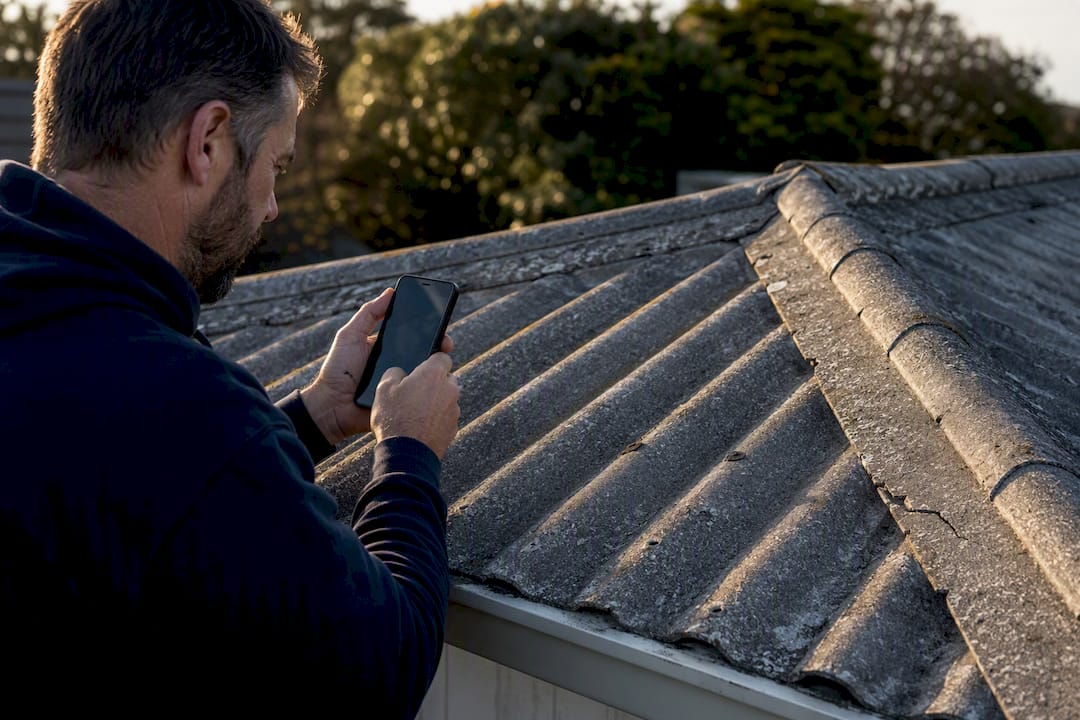
If your home was built before 1 January 2000, assume it may contain asbestos until testing proves otherwise. Do not touch, sand, drill, or disturb any material you suspect. Restrict access for children and pets, tell everyone in the household, and put the tools down until you know what you’re dealing with.
Asbestos was used across almost every part of New Zealand construction from the 1940s through to the 1990s, so age is the single biggest clue. It does not mean your house is dangerous. Materials that are intact and undisturbed generally stay put and stay safe. The risk shows up when someone cuts, drills, or breaks these materials without knowing what they are.
Your two next steps: contact your local public health service through Te Whatu Ora if you suspect asbestos in a non-work setting, or engage a reputable asbestos contractor or surveyor to arrange sampling before any renovation begins.
Don’t disturb suspected material — no drilling, sanding, or demolition.
Restrict household and pet access to the area.
Arrange laboratory testing through an accredited contractor before you touch anything.
Keep renovation and consent plans on hold until you have results.
Key Takeaways
Presuming pre-2000 New Zealand homes may contain asbestos, avoiding disturbance, and confirming presence through licensed testing before any renovation work is the single most reliable way to manage the risk.
Point | Details |
Presume, don’t guess | Homes built before 1 January 2000 may contain asbestos; treat suspect material as asbestos until tested. |
Never disturb suspect material | Sanding, drilling, or breaking asbestos-containing material is what releases fibres, not its mere presence. |
Get laboratory confirmation | Only accredited lab testing confirms asbestos; never take your own samples. |
Leave sound material in place | Intact bonded asbestos often carries lower risk left alone or sealed than removed unnecessarily. |
Use licensed professionals only | WorkSafe-licensed removalists and accredited surveyors are required for higher-risk asbestos work. |
This article is general information, not a substitute for advice from a qualified doctor. Consult a qualified healthcare professional about your own circumstances before acting on anything here.
Table of Contents
What asbestos is and how it was used in NZ homes
Asbestos is a group of naturally occurring fibrous minerals prized for decades for fire resistance, insulation, and strength. Chrysotile, the “white asbestos” variety, dominated New Zealand’s building products, though amosite and crocidolite turn up in older insulation and lagging.
New Zealand banned the import of raw asbestos in 1984, but that did not stop it appearing in buildings. Manufacturers and builders kept using existing stock and imported asbestos-containing products for years afterward. The import of asbestos-containing products was not banned outright until 2016. That gap is why WorkSafe and Te Whatu Ora both use 1 January 2000 as the practical cutoff for homeowners: if your house or any renovation-era addition predates that year, treat it as a candidate.
Asbestos cement sheeting, corrugated roofing, and vinyl floor coverings were everywhere in the mid-20th century because they were cheap, durable, and did the job better than most alternatives available at the time. Builders had no reason to think twice about it, and much of what they installed is still exactly where they left it. That is the crux of the issue for New Zealand homeowners today: these materials were built to last, and they have.
Chrysotile was the most common type used in NZ building products.
Raw asbestos import banned 1984; asbestos-containing product imports banned 2016.
1 January 2000 is the practical guidance date NZ agencies use for “may contain asbestos”.
Products installed decades ago often remain structurally sound and still in place.
Where asbestos is commonly found in NZ homes: a room-by-room checklist
You don’t need to open a wall to start narrowing down the risk. A visual walk-through, done without touching or disturbing anything, tells you where to focus attention before calling in a professional.
Roofing and cladding. Corrugated asbestos-cement sheeting, often sold as “Super Six,” and fibrolite cladding are two of the most common asbestos products on New Zealand houses built between the 1940s and 1980s.
Gutters, soffits, and fences. Older guttering, eave linings, and even fence panels or garden shed cladding frequently used the same asbestos-cement mix as roofing.
Textured ceilings and decorative plaster. That stippled “popcorn” ceiling finish in older lounges and hallways is a classic candidate, along with decorative cornices from the same era.
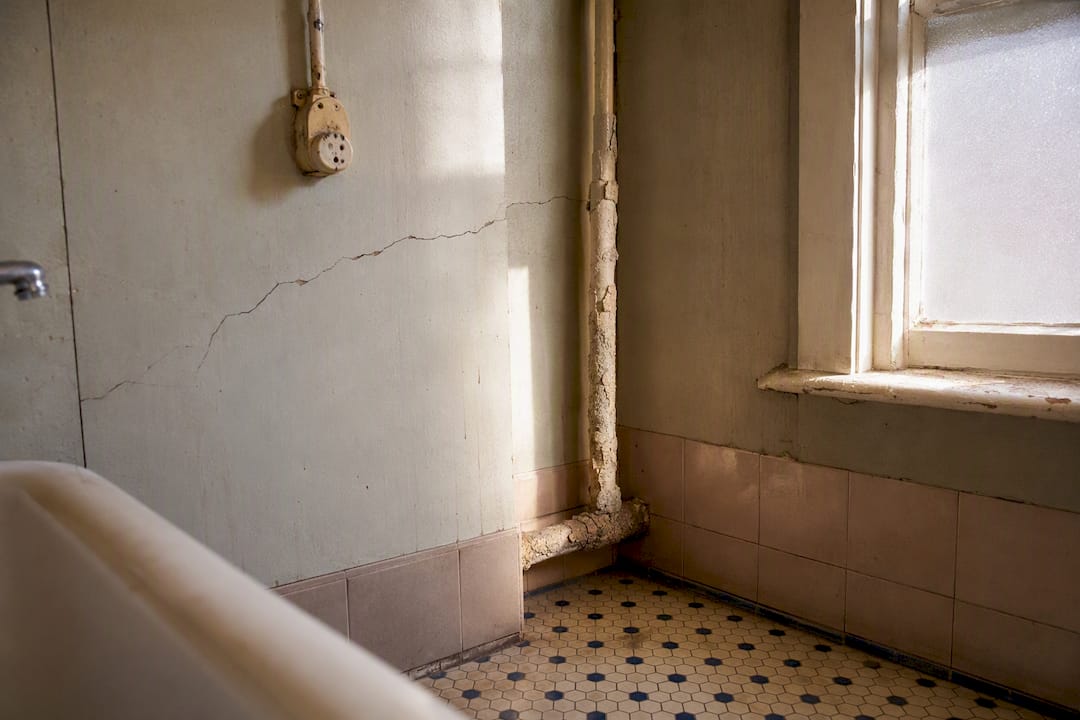
Bathroom and laundry fittings. Bath panels, hot-water cylinder cupboard linings, and old airing cupboards often contain asbestos board or insulation.
Flooring. Vinyl floor tiles and sheet flooring from before the 1990s, along with the black adhesive underneath, are a well-documented source.
Electrical and heating fixtures. Meter boards, fireplace surrounds, and old stovetop insulation pads sometimes used asbestos for heat resistance.
Pipe lagging and service areas. Hot water pipes wrapped in fibrous lagging, plus furnace gaskets and boiler insulation, are common in homes with older heating systems.
Soil and outbuildings. Broken or crumbling cladding can shed fragments into garden soil over decades, and garages or sleepouts built with leftover materials deserve the same scrutiny as the main house.
Look for cracking, crumbling edges, water staining, or previous DIY patch jobs. Damage of any kind raises the priority for professional assessment, even if the material has sat quietly for fifty years.
Pro Tip: Take photos of anything you’re unsure about rather than touching it. A surveyor can often assess likely risk from a photo before deciding whether physical sampling is needed.
Health risks: why there’s no safe level of asbestos exposure
There is no threshold below which asbestos exposure is considered risk-free. That’s the single fact that should shape every decision you make about material in your home. Inhaled fibres lodge in lung tissue and can cause asbestosis, mesothelioma, and lung cancer, with symptoms sometimes taking decades to appear after the original exposure.
That said, risk in a residential setting is not uniform, and understanding what drives it helps you prioritise where to act first:
Condition matters most. Bonded (non-friable) materials that are sound and painted, like intact asbestos-cement sheeting, generally do not release fibres into the air.
Disturbance is the trigger. Cutting, sanding, drilling, or breaking these materials is what releases fibres, not simply having them on the property.
Duration and concentration add up. A one-off brief exposure carries far less risk than repeated or prolonged disturbance, which is why occupational exposure historically carried a much higher disease burden than typical household proximity.
Fibre type affects behaviour. Amosite and crocidolite are generally considered more hazardous than chrysotile, though all types are treated as no-safe-level substances under New Zealand guidance.
A government review found that bystander risk from occasional low-level exposure is generally low provided proper precautions are followed, but the same review still recommends professional handling for friable material. In plain terms: an intact fibrolite fence panel sitting quietly in your backyard is a very different proposition to that same panel after someone has taken an angle grinder to it.
How to check and confirm asbestos in your home
You cannot identify asbestos by looking at it. Two materials can appear identical and have completely different fibre content, which is exactly why only laboratory analysis can confirm its presence.
A visual survey is the starting point. A trained surveyor walks the property, notes suspect materials by location and condition, and flags anything that needs sampling. Intrusive sampling, where small pieces are physically removed for testing, only happens where visual assessment can’t rule material in or out.
Do not take your own samples. Disturbing material to grab a sample is exactly the scenario that risks releasing fibres, which is why WorkSafe and Te Whatu Ora both recommend using a reputable contractor or, in a health context, contacting your local public health service for guidance. A typical asbestos testing process involves a site visit, sample collection by a trained technician, laboratory analysis, and a written report, though exact timelines vary by provider and lab workload.
Stage | What happens |
Initial survey | Surveyor inspects the property and identifies suspect materials by location |
Sample collection | Small samples taken only where needed, by a trained contractor |
Laboratory analysis | Accredited lab confirms fibre type and presence |
Written report | Locations, risk rating, and management recommendations documented |
A finished survey report should give you a location-by-location breakdown, a risk rating for each material, and clear recommendations, whether that’s “leave in place,” “seal,” or “remove before work proceeds.” Keep this report. You’ll need it for consent applications and future renovation quotes, and buyers of your home may ask for it too.
Should you leave it, seal it, or remove it?
New Zealand guidance follows a clear hierarchy, and it runs counter to what a lot of homeowners instinctively assume. Removal is not always the safest option. Bonded asbestos in good condition often carries lower risk left alone than it does once it’s cut, drilled, or pulled apart during removal work.
Leave it in place if it’s sound. Intact, undamaged bonded material that isn’t going to be disturbed by planned work is usually the lowest-risk option.
Seal or encapsulate if condition warrants it. Painting or coating asbestos cement with the correct products can lock fibres in place without the disruption of full removal, an approach documented by Asbestos Victoria and broadly consistent with New Zealand practice for sound bonded material.
Remove only when necessary, and only by licensed removalists. Renovation, demolition, damage, or deterioration are the situations that typically call for full removal rather than management in place.
Deciding which path applies means weighing a few practical factors: how the material is currently sitting, whether upcoming renovation work will touch it, what removal will cost versus sealing, and whether neighbours will be affected by dust or debris during any works. If you’re getting renovation quotes, ask contractors to price asbestos survey and removal work into the plan up front rather than discovering it mid-project. Sorted Home Solutions’ renovation defects list is a useful reference for what else to check before signing off on scope, since asbestos rarely turns up in isolation from other older-house issues.
If you choose to leave material in place, treat it as an ongoing responsibility, not a one-time decision. Check painted or sealed asbestos cement periodically for peeling, cracking, or water damage, and factor repainting or resealing into your general maintenance schedule the same way you would guttering or exterior cladding. A simple written note, room by room, of what’s been identified and its condition, doubles as an asbestos management plan and saves the next tradesperson (or buyer) a lot of guesswork.
Pro Tip: Photograph and date any sealed or encapsulated asbestos material now. If it starts to deteriorate in five years, you’ll have a clear before-and-after reference to show a contractor.
Homeowner and landlord duties under New Zealand law
The Health and Safety at Work (Asbestos) Regulations 2016 place specific duties on PCBUs (persons conducting a business or undertaking) and generally prohibit carrying out asbestos work unless the required controls and licensing are in place. If you’re engaging a contractor rather than doing the work yourself, this framework governs what they’re legally allowed to do and how.
For higher-risk or larger-scale removal work, contractors must hold a WorkSafe asbestos licence, and some jobs require a documented asbestos removal control plan, known as an ARCP, before work starts. This plan sets out how the removal will be controlled, what protective measures apply, and how air monitoring and clearance will be handled.
Before hiring anyone for asbestos-related work, verify:
Their listing on the WorkSafe asbestos licence holder register, which confirms they’re authorised for the class of work you need.
A sample survey report or previous ARCP, to see how they document risk and controls.
Clearance certificates from past jobs, confirming air quality met safe standards after removal.
Waste disposal records showing material went to an approved facility, not just “taken away.”
Sorted Home Solutions’ guide on choosing a renovation company covers the broader credential checks worth running on any contractor, and the same due diligence applies doubly when asbestos is involved.
What to do during renovations or if asbestos is disturbed
Renovation is where most accidental asbestos disturbance happens, mostly because people start demolition before they’ve confirmed what’s actually in the walls, floors, or ceiling.
Before you start any renovation:
Commission a survey if the house (or any part of it) was built before 2000.
Get asbestos testing and, if needed, an ARCP costed into your renovation quote from day one.
Schedule licensed removal or sealing work to happen before other trades start, not around them.
If material is disturbed unexpectedly:
Vacate the immediate area straight away and keep others out.
Seal off the space if you can do so without further disturbing the material.
Avoid sweeping, vacuuming, or dry dusting, which spreads fibres rather than containing them.
Change clothes and wash exposed skin before moving through the rest of the house.
Contact a licensed asbestos specialist and your local public health service for guidance on next steps.
After events like flooding or storm damage, prioritise physical safety first, then isolate any area where cladding or lagging may have broken apart, and bring in public health or licensed removal teams for cleanup and clearance testing before anyone reoccupies the space. If water damage has already compromised older materials, Sorted Home Solutions’ guide to repairing water damage is worth reading alongside your asbestos assessment, since the two issues often overlap in older homes.
Pro Tip: If you’re mid-renovation and unsure whether something disturbed is asbestos, stop work on that section entirely and get it tested before continuing, even if it costs you a day’s delay.
How a managed renovation handles asbestos risk
A full-service renovation folds asbestos management into the project instead of treating it as a separate crisis. Sorted Home Solutions coordinates licensed asbestos surveyors and removalists as part of scoping any older-home project, which means testing happens before demolition, not after someone’s already opened a wall.
Internal scoping tools, including the renovation defects list, help flag likely asbestos-risk areas early so testing and consent requirements get built into the project plan and price from the outset. Managing this early reduces the chance of delays and hidden costs later in the build.
Working with a managed service typically means:
One point of contact coordinating surveyors, licensed removalists, and your other trades.
Licensed work scheduled at the right point in the renovation sequence.
Clearance certification supplied once removal or remediation is complete.
Documented, compliant disposal records kept on file.
Common myths about asbestos in NZ homes
A surprising amount of bad advice circulates about asbestos, and some of it puts people at more risk, not less. Worth clearing up before you make any decisions.
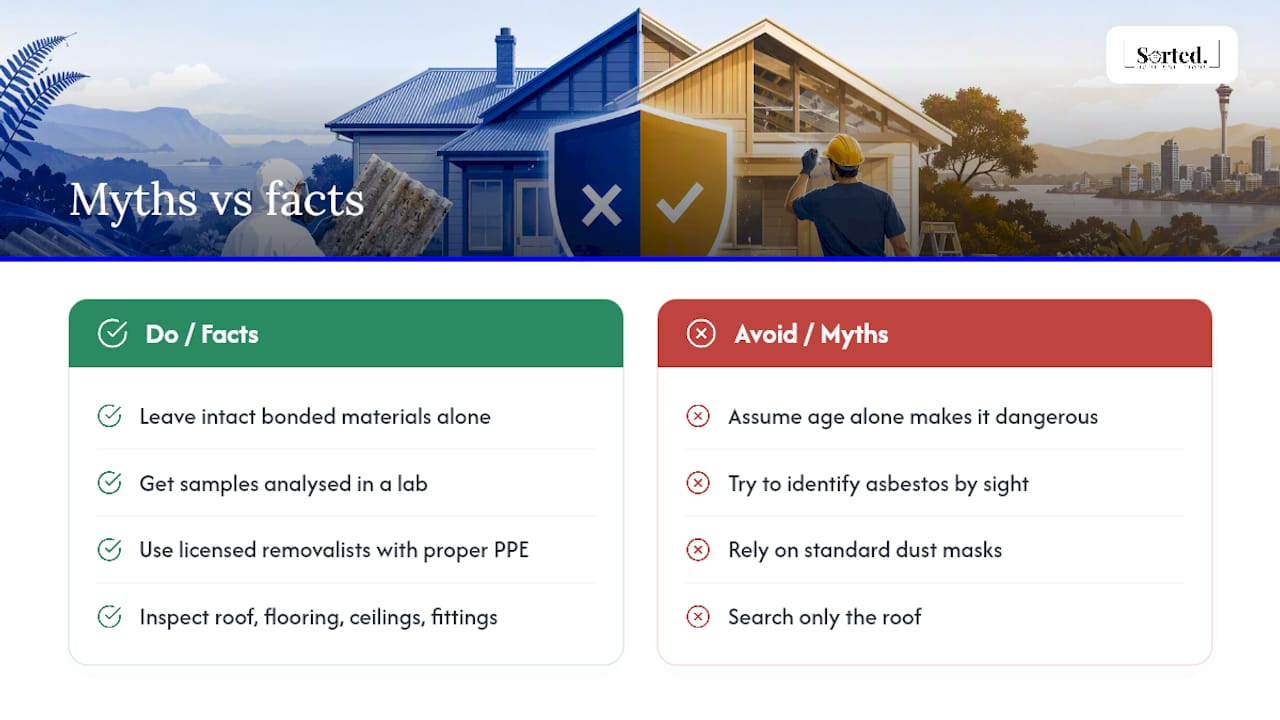
Myth: “If it’s old, it’s dangerous, so get it removed straight away.” Age alone doesn’t determine risk. Intact bonded material can sit safely for decades; disturbing it to “be safe” often creates the exact exposure you were trying to avoid.
Myth: “You can tell asbestos by looking at it.” You can’t, and neither can most tradespeople. Only laboratory analysis confirms fibre presence, which is precisely why sampling exists as a step rather than an optional extra.
Myth: “A dust mask is enough protection.” Standard dust masks don’t filter asbestos fibres effectively. Licensed removalists use specific respiratory protection and containment procedures for a reason.
Myth: “Asbestos was only used in roofing.” It turned up in flooring, ceilings, cladding, pipe lagging, fireplace surrounds, and electrical fittings. Limiting your search to the roof misses most of the likely locations.
Myth: “All asbestos insulation is a major risk in NZ homes.” Loose-fill asbestos insulation in wall cavities is far less common in New Zealand than in some other countries, where fibreglass and wool insulation have long been the standard. That doesn’t rule out other asbestos products in the same house, but it’s a narrower risk than many homeowners assume.
Myth: “Once it’s sealed, you never have to think about it again.” Sealed or encapsulated material still needs periodic checking. Sealing manages the risk; it doesn’t make the material disappear.
Sorted Home Solutions’ take on managing renovation risk
Most asbestos advice for homeowners stops at “get it tested,” which is correct but incomplete. The gap in most guidance is timing: too many renovations start with demolition and only discover asbestos once a wall is already open, which turns a manageable pre-planning step into an expensive, stressful delay.
What the evidence actually supports is treating asbestos assessment as a normal line item in renovation scoping for any pre-2000 home, not a special case reserved for “old, obviously rundown” properties. A tidy 1970s house with fresh paint is just as likely to have asbestos cement under that paint as a visibly tired one. Presentation tells you nothing about what’s underneath.
The other place conventional advice falls short is management bias toward removal. Removal feels decisive, but it’s not automatically the safer option, and sound bonded material left alone often carries less risk than material disturbed unnecessarily. If you take one thing from this guide, prioritise getting a survey before you touch anything, not after.
— Rudi
Ready to plan a renovation with asbestos risk properly managed?
If your home was built before 2000 and you’re planning any renovation work, get asbestos surveying costed into the project from the start rather than discovering it once demolition begins. Sorted Home Solutions coordinates licensed surveyors, removalists, and every other trade on the job through a full home renovation service, with one point of contact managing the schedule, the consents, and the clearance paperwork. If a bathroom or kitchen refresh is on the cards, our bathroom renovation and pricing pages show how asbestos assessment fits into a typical project budget. Get in touch through our enquiry page to talk through your project.
Sources
Recommended
Comments